Why Does My Iron Keep Dropping Even When I Eat Right and Take the Tablets?
Low ferritin, and the life that may be sitting around the number
Of all the deficiencies in the body, low iron tends to bring the most frustration.
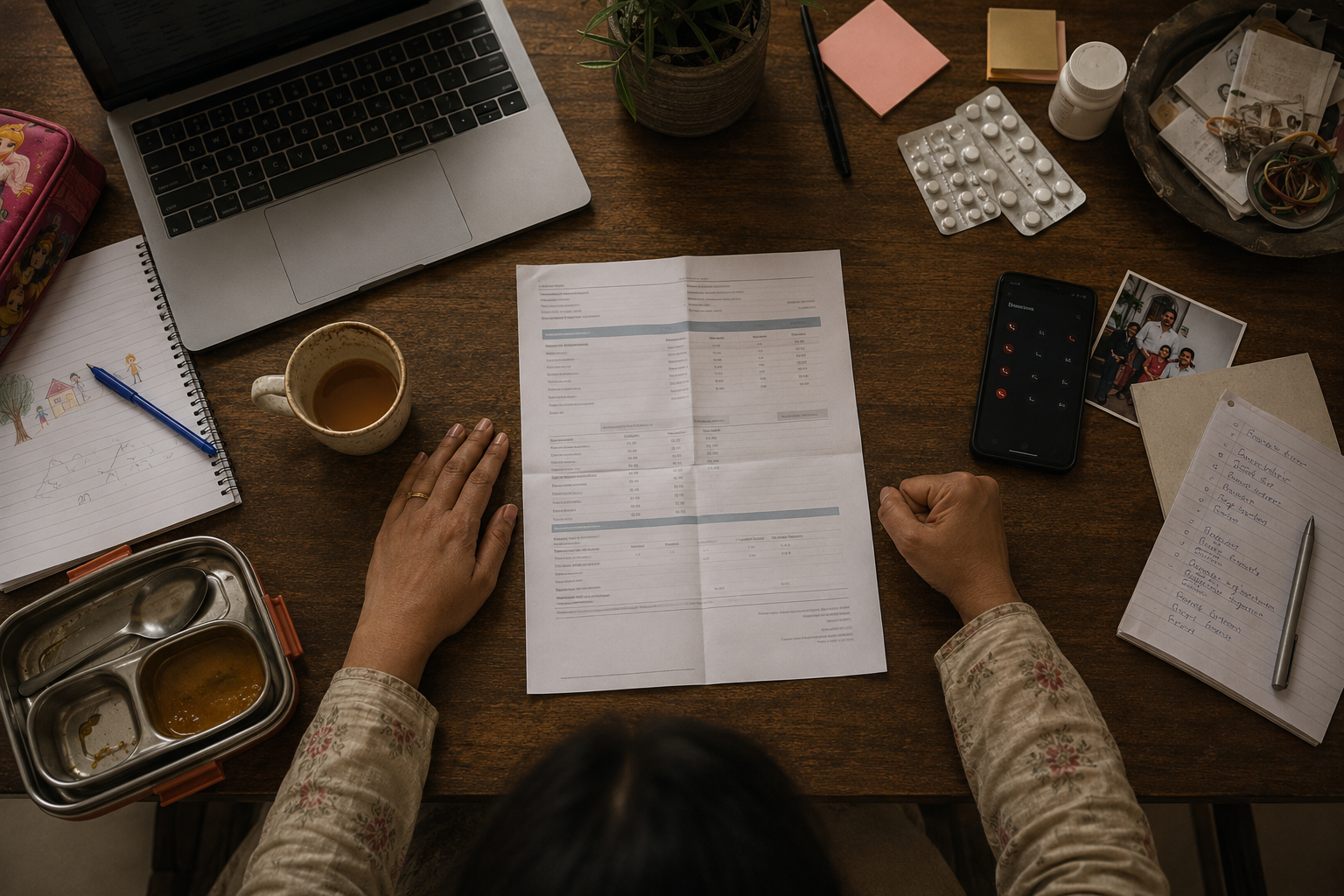
You've been told you're anaemic, or that your ferritin is low. You started the supplement. You added the spinach, the dates, the iron-rich everything. Maybe your haemoglobin nudged up for a while. And then, at the next test, the number had slipped again, and you were left feeling that your own body was refusing the help.
Some of you will have heard that you aren't following the advice. Some will have heard it at home too, that you're weak, or making too much of it. And after enough years of hearing both, some of you start to believe them.
Iron is a good place to look at why 'eat more of it' so often fails, and at the question sitting under the supplement.
A body made small
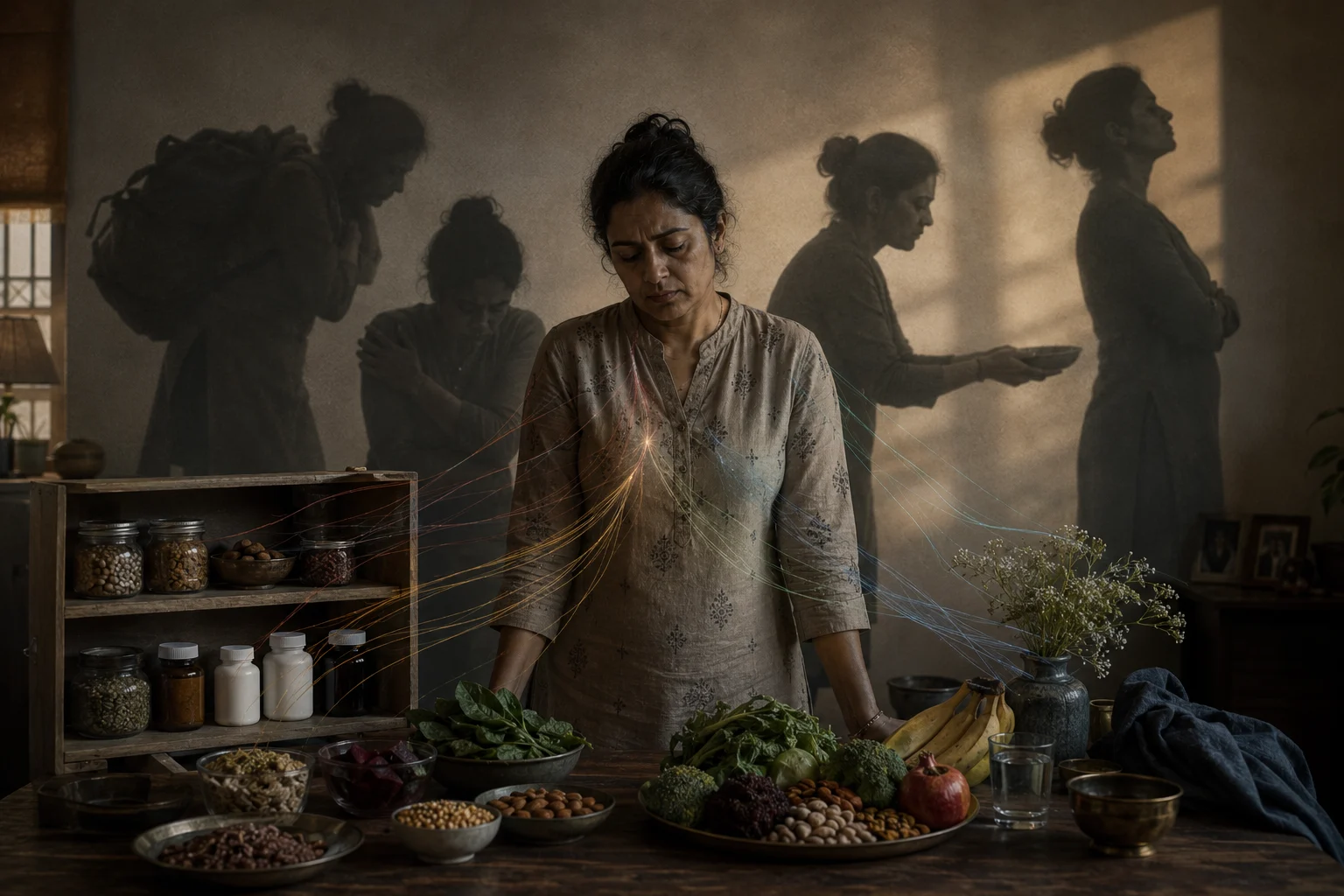
The iron pattern belongs to the person whose life keeps asking for strength while they have no permission to own it. Women are seen with it most, and it gets put down to menstruation, but it isn't limited to them. What I see in the pattern is continuing without reserve, managing, adjusting every single time, needing little, not asking or asking late, and resting only when the body is on the verge of collapse, while all of it is called maturity.
The lives differ, and one instruction runs underneath them: don't stand too strongly, don't take up space, don't become difficult.
The woman who eats last, and in many of our homes that is not a personality trait but a cultural instruction handed down through generations. The one who has not stopped in years. The one who absorbs everyone else's needs and quietly metabolises her own.
Haemoglobin, which carries iron, brings oxygen to the blood, and with it the strength to stand, exert, resist and recover. It lets a person live from inside the body rather than only serve from it. Ferritin is the store. It's what the body has set aside for later, the margin left once the ordinary demands of the day have taken their share. And when do we keep a reserve? When we're looking forward to something that's worth saving for.
The emotion that gets put down
Iron can be read as standing for one of the first life forces most of us are conditioned to put down, and that is anger. It gets put down because it makes other people uncomfortable. Anger says a line has been crossed, or that something isn't enough, or that I'm here too. When it is put down it doesn't vanish, and the person doesn't turn peaceful either. The force goes inward and shows up as fatigue, politeness, resignation, heaviness and a resentment that never gets spoken.
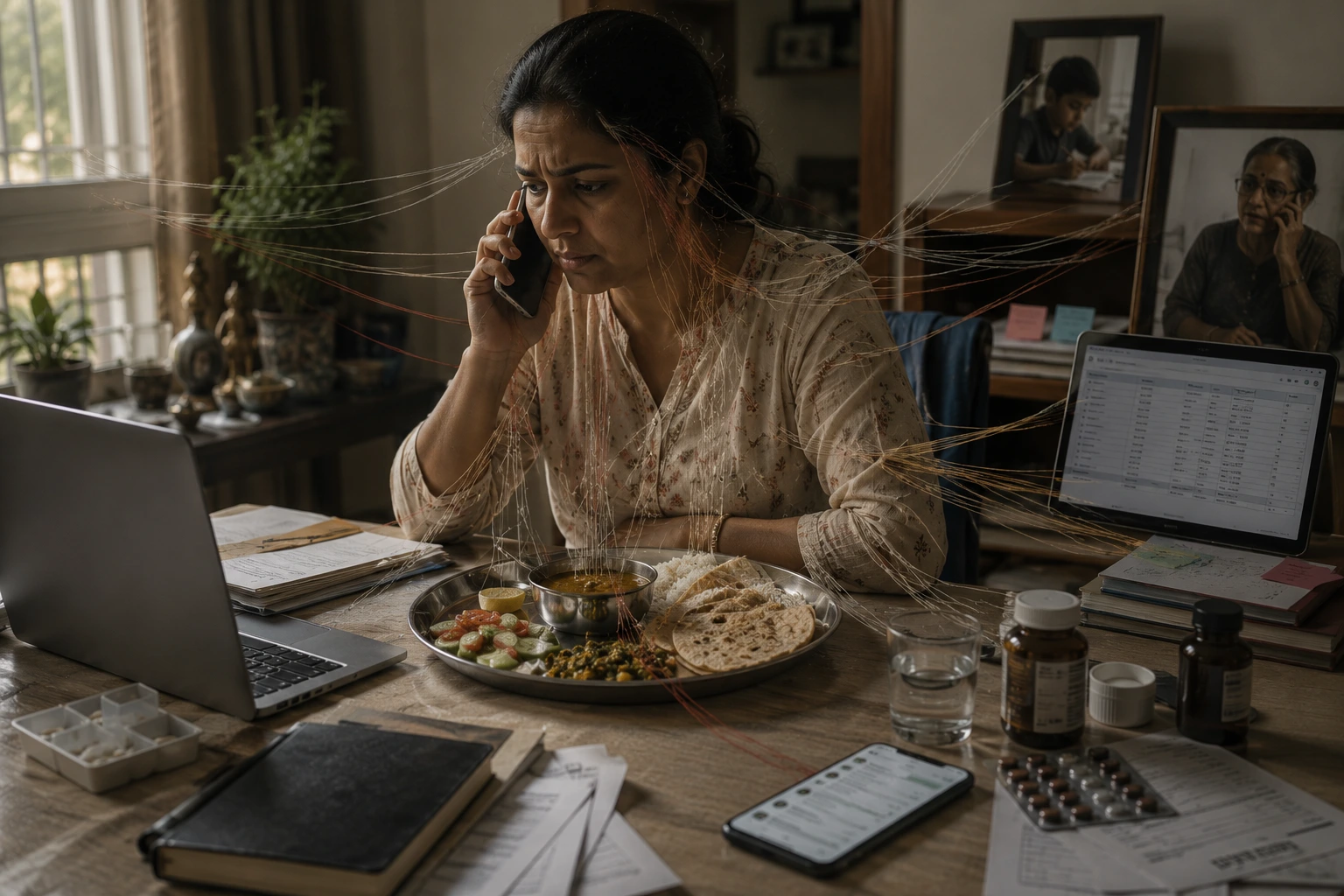
Listen to what these people say. 'I can manage.' It sounds like strength, and listeners are impressed by it. Inside the pattern it means 'I no longer expect anything.' The person may be highly capable, but capability without support turns dangerous: the household and the office go on assuming she's fine, she keeps managing, and the body keeps drawing on its reserves.
Then there's 'I don't need much.' This one gets praised, with words like humble, simple, easy to love, and slowly it becomes an instruction to the body to need less, want less, expect and ask for less. The whole life gets quietly reorganised around not being an inconvenience.
Iron is where the body finally refuses the lie.
In Indian homes the politeness hides in the most ordinary routines. Who eats first. Who gives in to keep the calm. Who delays her own needs because the child's fees, a parent's appointment or work came first. Who spends on everyone without a thought and hesitates over the cost of her own. This is where the body learns its rank in the family.
Replace the iron without changing the life around it, and the number may rise while the pattern keeps draining. The body isn't a machine being topped up. It's a living record of what the person is still required to be. It runs low where the life keeps taking, and in the iron pattern what has been taken includes more than energy: it is space, anger, assertion and the right to need more without apology.
It is a life that asked for enormous output and offered very little replenishment in return. A body living that life is a body running on a deficit.
What iron seems to be pointing at
Iron is the body's strength. It is what lets your blood carry oxygen, what lets you stand, exert, push back and take up room in the world. It has always struck me as the mineral of presence and force, the capacity to be solid and unapologetic in your own space.
So when iron keeps slipping away from someone who has spent years made small, not allowed to be angry, not allowed to need, not allowed to take up space, I think the body is naming something. It is recording, in mineral, a life lived without enough ground to stand on.
You don't have to believe that for it to be useful. You only have to let it become a question.
The question iron asks is where strength was disallowed, drained or made unsafe. Where does your body say no before your mouth does? Where has 'I can manage' become a slow leak? Where did you become proud of needing little, because needing more once made trouble? That is where the deeper work starts, and it is work the supplement was never going to do on its own.
What taking up space looks like
Taking up space is usually not about boundaries, or being assertive or aggressive, or being selfish. It means giving importance to your needs, your time and your opinion as much as anyone else’s, without apologising for it.
A few everyday moments make it easier to see.
- You sit down to eat when the food is ready, and don’t wait until everyone else has been served.
- You take the choice piece sometimes, or the first piece, without making a joke of it.
- You want something clearly, without ‘maybe we could’ in front of it.
- You let someone be unhappy with you and don’t rush to fix it.
- You take or ask for help when you want it, without working out how you’ll repay it.
- You rest before you collapse, and you don’t need a fever to justify it.
How many women go through this, afraid of taking up space, and the pattern is often missed because the periods and the diet get all the attention.
This is one of ten deficiencies I explore in my free guide, *The Emotional Life of a Deficiency* — each one read on two layers, the physical and the human, with the questions worth holding for each. No diagnosis, no blame, just a different way of listening to what your body has been recording.
This article is educational and reflective. It is not medical advice, diagnosis, or treatment. Low iron and anaemia can have serious medical causes and should always be assessed and managed with a qualified healthcare practitioner. Please do not start or stop any supplement or medication based on this article.