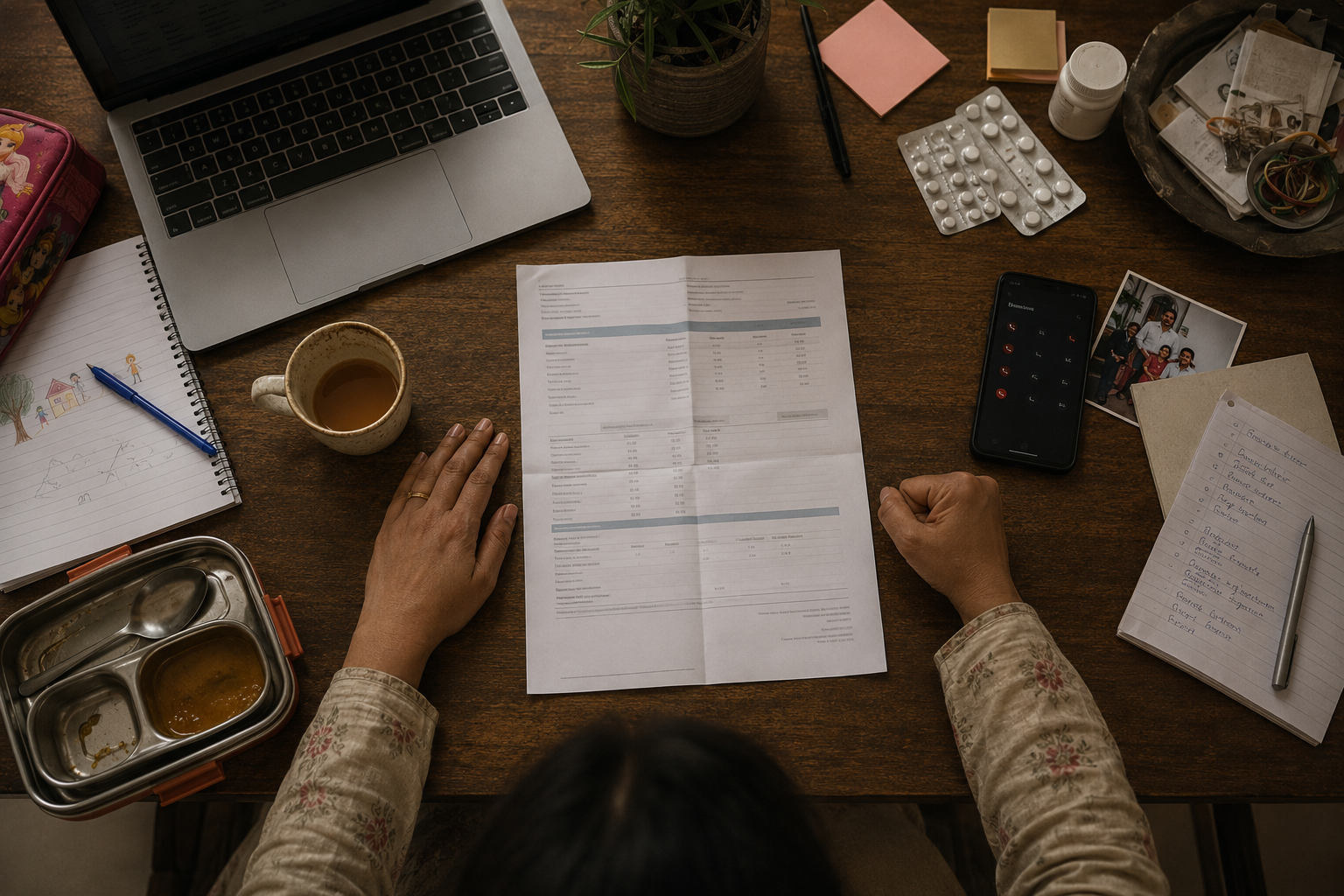
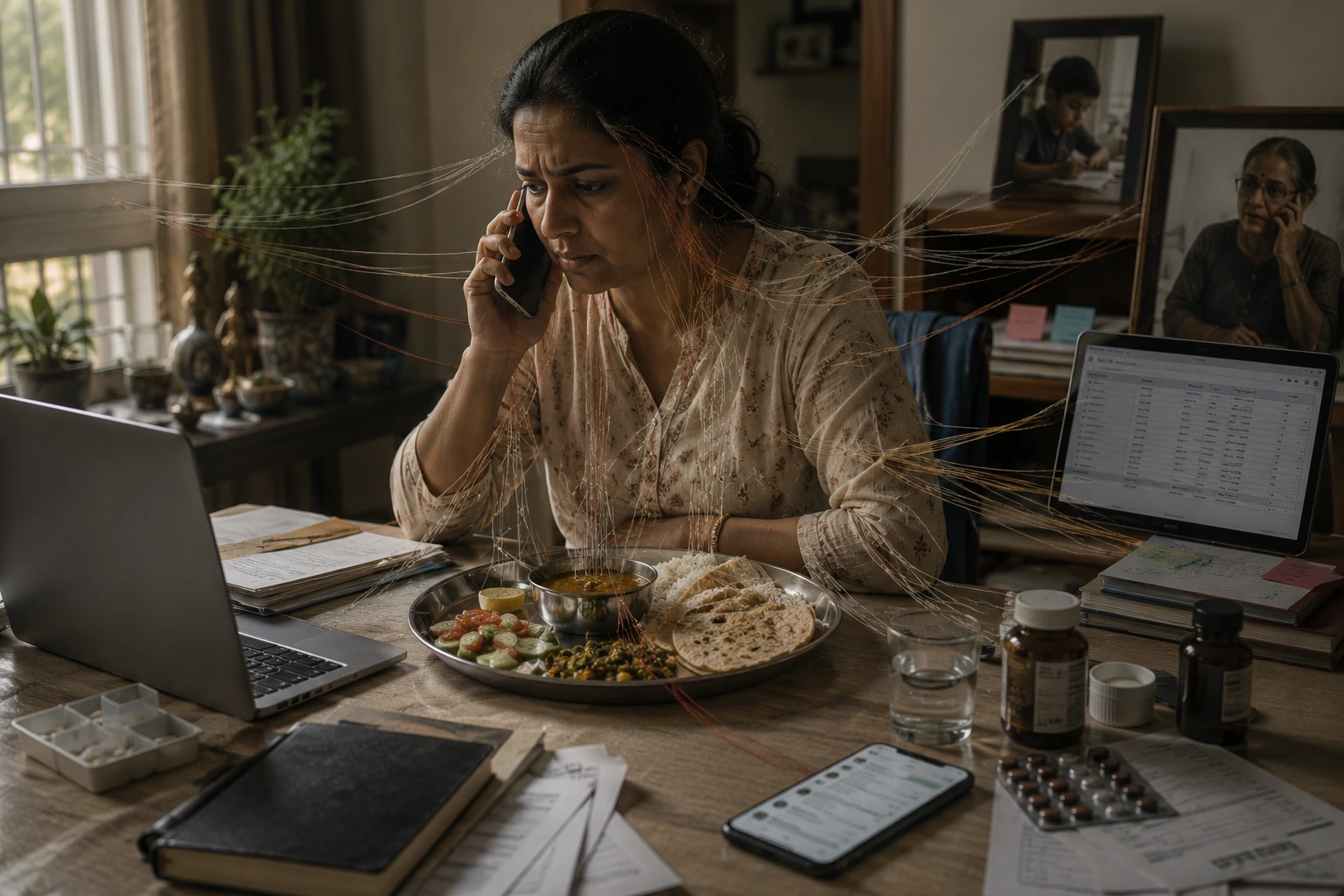
Why the same blood report can point towards very different emotional lives
Iron, vitamin B12, vitamin D and magnesium can all appear as low numbers on the same report. The doctor may prescribe tablets, injections, dietary changes or further investigations, and those steps remain necessary. A genuine deficiency needs to be treated as a genuine deficiency.
But the numbers do not all tell the same story.
Iron does not perform the same work as magnesium. Vitamin D does not hold the same function as B12. Protein, zinc and calcium each support a different aspect of the body. In Somashadow, that difference matters because the physical role of a nutrient often provides an entry into the emotional position surrounding it.
This is not a chart in which low iron automatically proves that you are powerless, or low vitamin D proves that you are hiding. It is not meant to be used like a horoscope where every description can somehow be made to fit. The medical reason for the deficiency still has to be investigated.
The emotional layer begins only where there is recognition.
Perhaps one question below makes you pause. Perhaps one description feels uncomfortably close to the way you have been living. That is enough. You do not need to force a meaning onto every number.
Iron: when your strength has no room
Iron helps the blood carry oxygen. It supports the body’s ability to stand, move, work and meet the world with force. When iron falls, the person often feels weak, breathless, tired and unable to do what previously felt ordinary.
Emotionally, iron belongs to strength, but not the dramatic kind. It belongs to the basic right to stand your ground, exert will, take up space and say, “This is what I need.”
The person around recurring low iron is often far from weak in the way other people understand weakness. She may run a home, manage a job, care for children and continue through exhaustion without making much noise about it. He may handle every practical problem and still feel that he has no real say in the relationships that matter most.
Their strength is welcome when it serves other people. It becomes inconvenient when it tries to speak for itself.
They adjust before asking. They soften anger into understanding. They know what they want but feel that insisting upon it would create conflict, disappointment or the accusation of being selfish. Even when they are physically exhausted, some part of them continues to believe that they should be able to manage.
The body becomes depleted inside a life where strength is constantly used but rarely given a clear direction.
A woman may carry the entire family and still be treated as though she is overreacting when she asks for consideration. A man may remain responsible for every decision while privately feeling powerless inside his own home. The strength is real. The permission to use it on one’s own behalf is not.
Ask yourself: Where in my life am I expected to remain smaller, softer or more accommodating than I actually am?
Protein: when you hold everyone and are held by no one
Protein is the building and repair material of the body. It helps create structure, maintain tissue and rebuild what has been used.
Emotionally, protein belongs to support, backbone and the experience of being held.
Some people spend their entire lives becoming the structure for everyone else. They remember appointments, settle arguments, arrange meals, manage money, anticipate problems and notice what has to be done before anybody asks.
They are the person others call when something goes wrong.
But when they are tired, frightened or uncertain, there is often nobody they can lean upon in the same way. They may have people around them, but not many places where they can put down their own weight.
“I eat last” is rarely only about food.
It may be the smallest visible part of a much larger emotional position. Other people’s needs are urgent. Their own can wait. Other people are allowed to fall apart. They must remain functional. Other people are protected from worry. They carry it quietly.
Even receiving help can feel uncomfortable because support creates a debt in their mind. They immediately begin thinking about how to repay it, minimise it or prove that they did not really need it.
The person becomes everybody’s support while slowly forgetting what it feels like to be supported.
Ask yourself: Who is holding me with the same care with which I hold everybody else?
Vitamin D: when being visible does not feel safe
Vitamin D supports bone health, immune function and mood. The body produces it through the skin’s exposure to sunlight.
Emotionally, vitamin D belongs to visibility, warmth and the right to occupy the light.
Some people do not merely avoid attention. They have learned that attention carries a cost.
They may have been criticised whenever they stood out, mocked for their body, compared with a sibling, accused of showing off or made responsible for other people’s jealousy. They learned to do good work quietly, reduce compliments quickly and remain less noticeable than they really are.
They may avoid photographs, gatherings or clothes that draw attention. They may speak well in private but shrink in a room where they are being watched. They may have ambitions but keep presenting them as small, practical or unimportant.
A woman may hide because her body has been discussed too often. A man may hide because failure would become public and success would invite expectations he does not want to carry.
The person is not necessarily shy. They may be social, capable and competent. But there is a difference between being present and allowing oneself to be fully seen.
Visibility can feel dangerous because being seen once meant being judged, corrected, envied or found wanting.
Ask yourself: Where have I decided that it is safer not to be fully seen?
Vitamin B12: when absence became easier than presence
Vitamin B12 supports red blood cell formation and neurological function. It is important for memory, mood and the protective covering around the nerves.
Emotionally, B12 belongs to presence.
Presence means being inside your own experience strongly enough to know what you feel, remember what happened and respond from where you actually are.
For some people, that became too expensive.
They learned to remain functional without remaining fully connected to themselves. They complete the work, answer questions, care for others and move through the day, but some part of them is always slightly elsewhere.
This does not always look dramatic. It can appear as forgetfulness, emotional flatness, losing hours inside work, moving automatically through routines or reaching the evening without knowing whether the day made you angry, sad or frightened.
The person may say, “I am fine,” not because they are hiding a clear feeling, but because they have become genuinely disconnected from the part that would know.
Disconnection once helped them survive something that felt too much to remain present for. Over time, absence became a habit.
The body remained in the room. The person learned to leave quietly.
Ask yourself: What becomes difficult when I am fully present inside my own life?
Magnesium: when the body never fully stands down
Magnesium supports muscle relaxation, nerve function, sleep and many essential processes throughout the body.
Emotionally, magnesium belongs to release.
The person around this pattern is often tired but rarely off duty. They sit down, but the mind continues planning. They go on holiday and still monitor everyone’s comfort. They lie in bed while reviewing the day, preparing tomorrow or waiting for the next problem to announce itself.
Relaxation is postponed until everything is handled.
Everything is never handled.
There is always another message, another responsibility, another decision or another person who may need something. Even when no demand is visible, the body remains prepared for one.
This person may look calm from the outside. The tension is stored in ordinary places: the jaw that remains tight, the shoulders that do not come down, the stomach that never settles, the sleep that stays light and the irritation that appears when somebody interrupts the small amount of control they have managed to create.
Rest becomes another activity to perform correctly. They may meditate, exercise, take a holiday or lie down, yet continue checking whether they are relaxed enough.
The body does not know how to stand down because standing down once meant missing something important.
Ask yourself: What am I still bracing for, even when nothing is happening right now?
Zinc: when asserting a need feels dangerous
Zinc supports immune function, tissue repair and wound healing.
Emotionally, zinc belongs to protecting what is vulnerable and responding when something has been crossed.
The person around this pattern may understand boundaries very well in theory. They know what they should refuse. They recognise when somebody’s tone is disrespectful. They know they need privacy, help, rest or consideration.
The difficulty begins when another person is actually standing in front of them.
The sentence becomes softer. The refusal turns into a long explanation. The clear need becomes a suggestion that the other person is free to ignore.
They may be easily hurt because they notice every crossing, but still struggle to protect themselves at the point where the crossing happens. The anger arrives later, often in private, after the moment has passed.
They become guarded without becoming protected.
A person can spend years preparing for hurt while still allowing the same people to wound them in the same way. The defence remains internal. The boundary rarely becomes a spoken sentence.
Ask yourself: What do I need that I have still not allowed myself to say clearly?
The nutrient is not the diagnosis of the person
Not every description will fit, and it should not.
Someone can have low iron because of bleeding, low B12 because of absorption problems, low vitamin D because of limited sun exposure or low magnesium because of medication, diet or another medical factor. The emotional pattern does not cancel those realities.
It asks a different question.
What kind of life has been forming around the deficiency?
Has strength been continually spent without being used on your own behalf? Has nourishment kept moving outward? Has visibility become unsafe? Has absence become easier than presence? Has the body remained on duty even while resting?
A blood report shows what is low. The emotional layer examines what has been repeatedly difficult to hold.
The two do not compete. They describe different parts of the same person.
And sometimes the most important clue is not the deficiency itself, but the fact that the same number keeps falling despite the diet, supplement and discipline being in place.
That is where the next article begins.
This article is educational and reflective. It does not replace medical assessment, diagnosis, supplementation or treatment. Continue your medical care as advised.